
Deep Flow Guttering
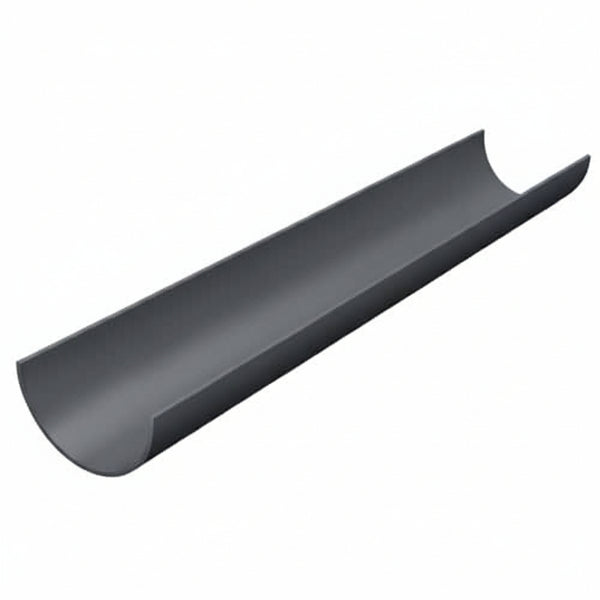
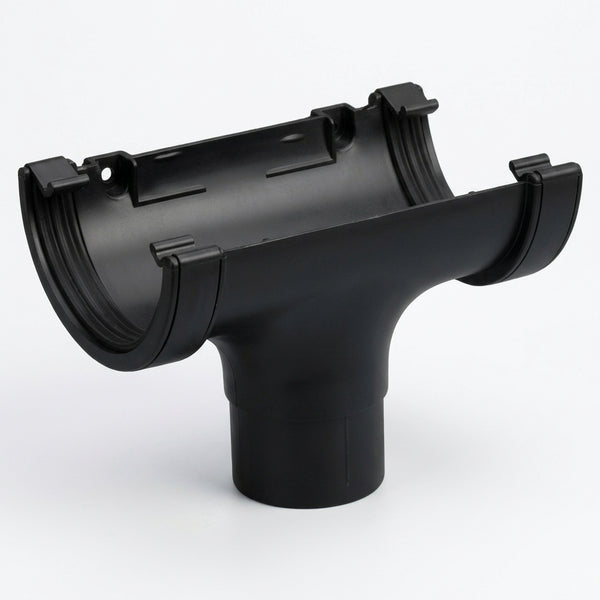
Deep flow guttering carries a higher volume than standard half round, which suits a large roof area, a steep pitch or a long run. The 120mm profile comes in 4m lengths with 68mm round downpipe, angles and outlets. For an average roof, plastic guttering in half round is usually enough.
Free delivery on orders over £150 inc VAT.
22 UK Branches


In Stock

In Stock

In Stock


In Stock


In Stock


In Stock


In Stock


In Stock


In Stock


Choosing Deep Flow Guttering
Frequently Asked Questions
Most house roofs are fine on 112mm half round with 68mm downpipe. Step up to a deep flow or ogee profile where the roof area is large, the pitch is steep, or one run serves a long elevation. Warehouse, farm and flatted buildings need the 170mm and 200mm commercial sections.
Look at the front edge from the ground. A plain curve is half round, a flat face with a square shoulder is square, and a moulded, shaped front is ogee. Then measure across the top of the gutter: 112mm and 114mm are the common domestic sizes, with 125mm, 130mm and 170mm on deeper and commercial systems.
Fascia brackets are normally fixed at 800mm to 1000mm centres, closer where snow load is likely, with a bracket within 150mm of every union, angle and outlet. Set a fall of roughly 1:600 towards the outlet, about 3mm per metre, so water runs off rather than standing in the bottom of the gutter.
At the low end of the fall, above a gully or a suitable discharge point, and as close as practical to a downpipe route that can run straight down the wall. On a long elevation it is usually better to fall to an outlet at each end than to run the whole length to one, which needs more fall and a deeper drop.
68mm round is the standard partner for half round and deep flow guttering, and 66mm square goes with square and ogee profiles. Cast iron effect systems use a narrower 65mm square to keep the period proportions. The pipe has to match the outlet on the gutter, so settle the gutter profile first.